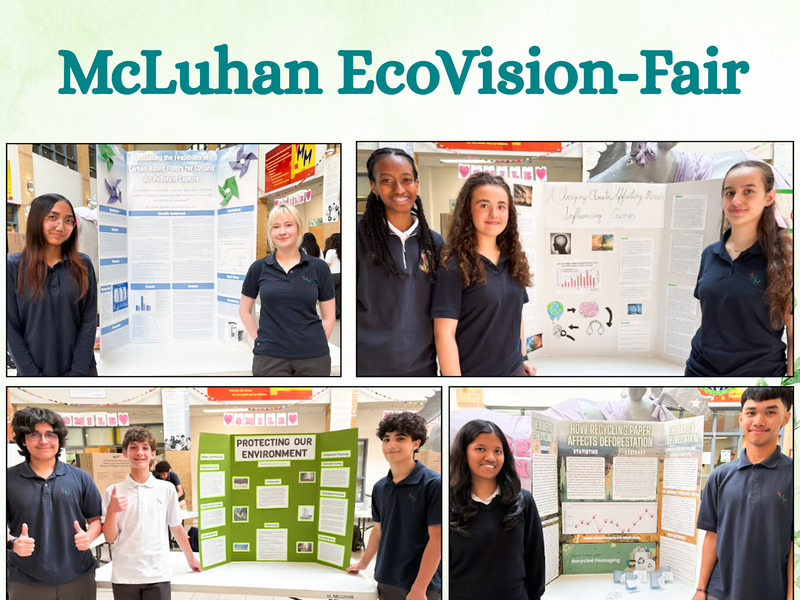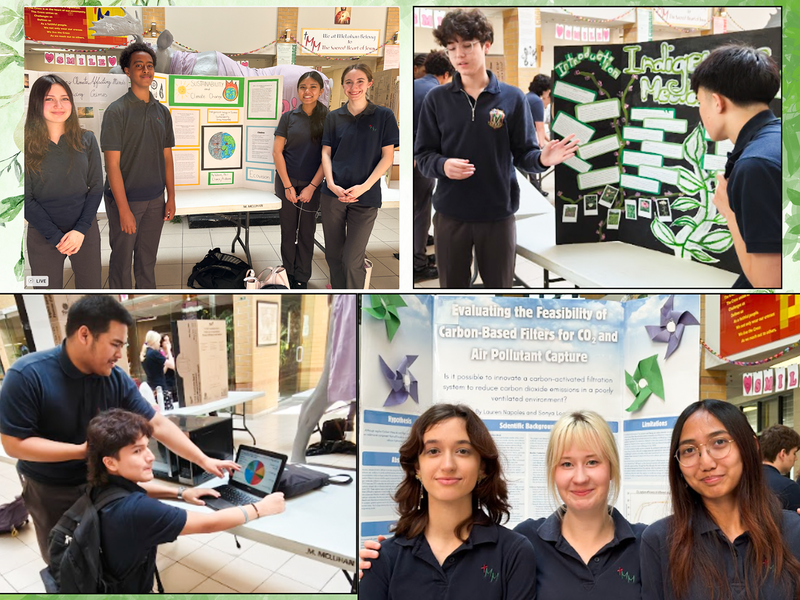
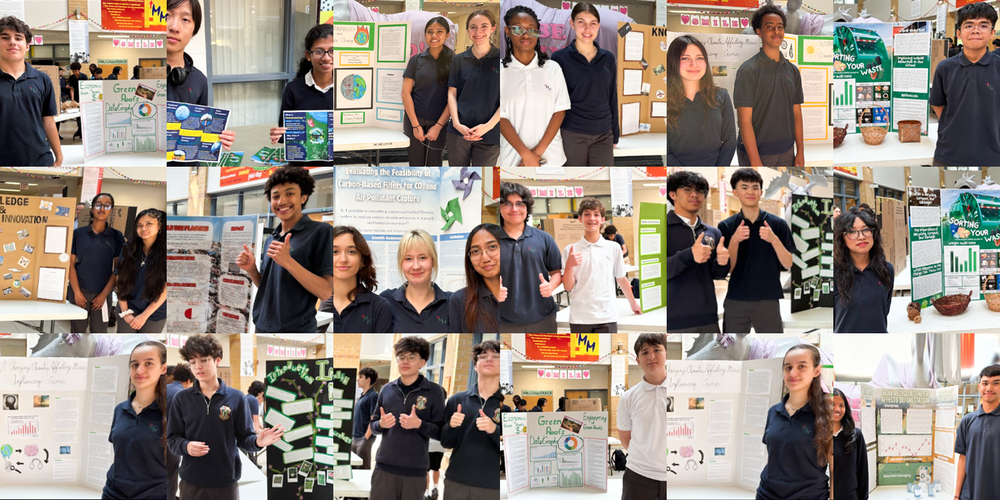
McLuhan EcoVision is an initiative that students at Marshall McLuhan Catholic Secondary School have been actively engaged in over the past two years through the Youth Climate Action Initiative, a collaboration with the City of Toronto. The project includes a wide range of activities and actions designed to raise awareness about climate change and environmental sustainability within the school community.
Students have conducted energy audits of the school community, evaluated waste management practices including recycling and garbage systems, investigated the use of reusable and non-reusable lunch items, explored the relationship between artificial intelligence and environmental issues, and examined Indigenous contributions to medicine and environmental sustainability. Additional areas of study included the application of technology in green roof systems and paper recycling processes.
Through research, collaboration, and community engagement, students developed a deeper understanding of environmental challenges and sustainable solutions. The culminating stage of this initiative is the EcoVision Fair, where students showcase their research, projects, and learning outcomes, sharing their knowledge and inspiring environmental action throughout the school community.
Here are the students’ reflections on their learning experiences:
Topic: Nanotechnology and the Environment
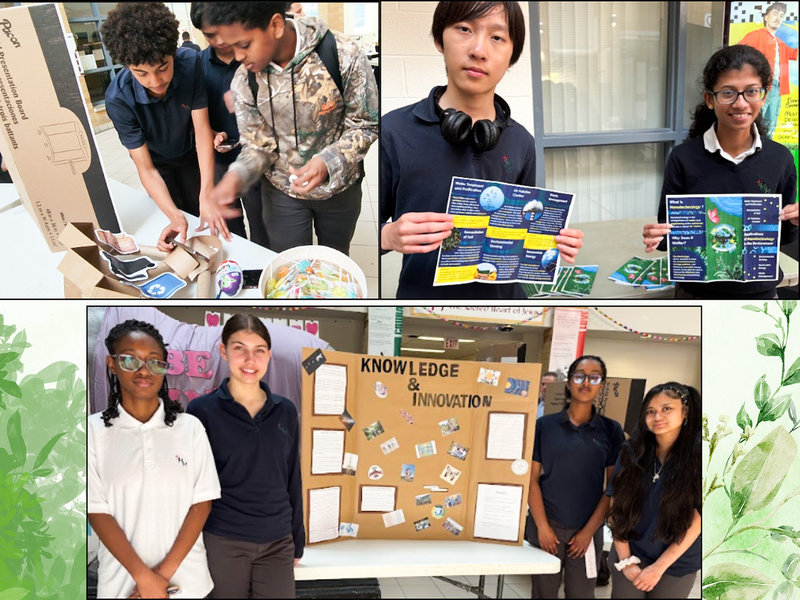
The Eco Vision Club in Marshall McLuhan is a valuable student-led initiative. This club is responsible for organizing several projects, initiatives, and events throughout the year with the intention to turn Marshall McLuhan into an eco-friendly place, by raising environmental awareness and promoting healthy recycling habits. As the financial director of this club, collaborating with the other club members to facilitate these projects and initiatives has been an invaluable experience. One of my most notable contributions to the EcoVision club was the creation of an educational pamphlet, promoting sustainable environmental practices using nanotechnology. This pamphlet was distributed among many students during the EcoVision Fair with the intent to spread awareness and spark discussion regarding the future of nanotechnology and its role in the environment. By working on this project, I learned how applications of nanotechnology can be used to help address environmental challenges through methods such as soil remediation and pollution control. Being able to share this knowledge with other students at my school has not only broadened my knowledge in environmental science, but also has enabled me to uphold the values of the EcoVision club and promote environmental awareness. - Aidan, S.
Topic: Indigenous Medicine
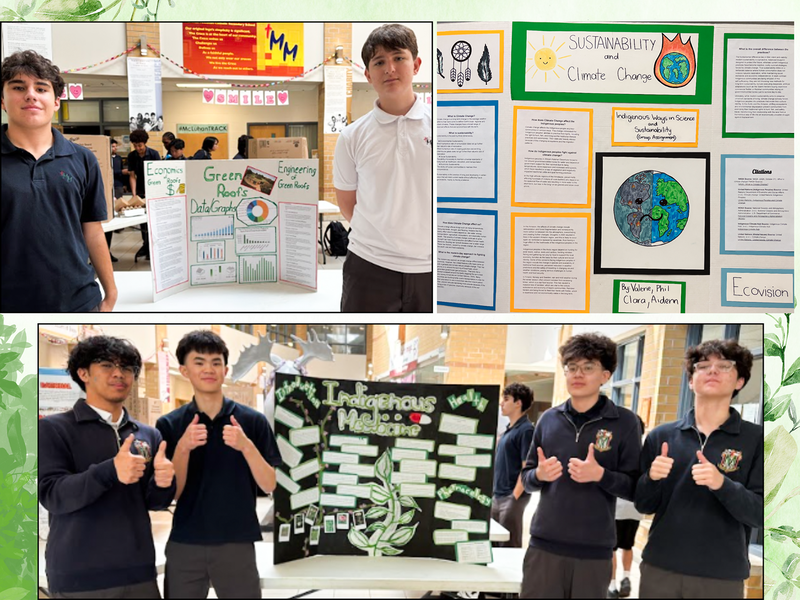
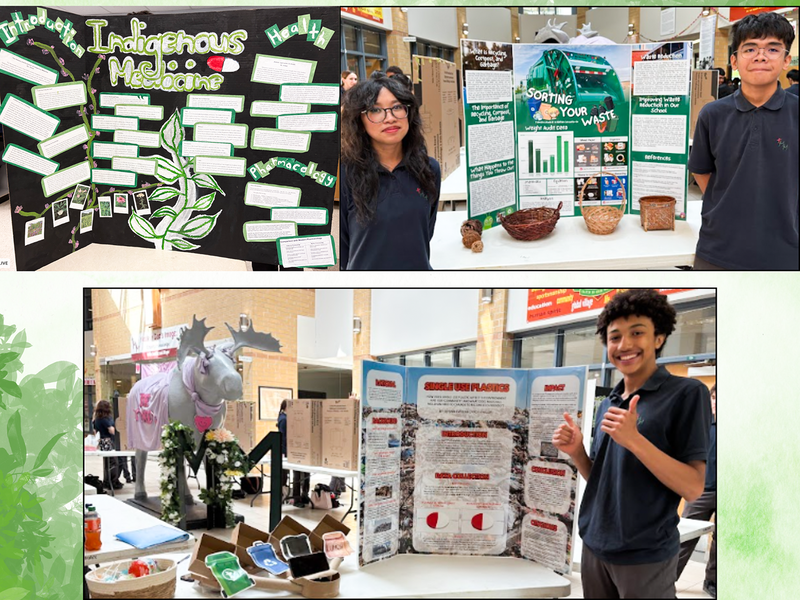
Our science fair project explores the history and practice of Indigenous medicine in Canada. We explored how First Nations peoples developed medical knowledge over thousands of years by learning from the land using plants like echinacea, yarrow, rat root, and Labrador tea to treat illness and maintain health long before Western pharmacology existed. The project also highlights how Indigenous medicine extends beyond physical treatment, as seen through the Four Sacred Medicines. The Four Sacred Medicines, tobacco, sage, sweet grass, cedar hold more of a spiritual significance rather than physical healing. A key part of our research focused on how this knowledge was nearly lost between 1800 and 1900, when the government suppressed Indigenous traditions, and how communities protected their practices in secret. Finally, we drew comparisons between Indigenous pharmacology and Western medicine, showing how Indigenous knowledge actually influenced contemporary drugs like aspirin. - David, I. Ethan, P. Kurt, D. Ryan L.
Topic: Indigenous Approaches to Environmental Sustainability
Our EcoVision project exposed how Indigenous communities, through their connection to the land, embodies a profound understanding of sustainability and climate change. It taught us how much effort it takes to find effective strategies to help the environment. We spent a large amount of time learning about how Indigenous approaches to sustainability are derived from their resources in reach. We tested different ideas to see what would actually make a difference for the planet. Moreover, by observing the Indigenous practices, we gained insights into their practices to work around climate change. In the end, we understood that everyone has their own way of coming up with ideas that we need these ideas to work together to truly sustain our Earth. - Aidenn, M., Clara, B., Phylimone, Y., and Valerie, C.
Topic: Protecting Our Environments
For our EcoVision project, we researched Indigenous ways of conserving the environment, including controlled burns, sustainable hunting, using goats for vegetation management, and other technological practices. We learned that goats can help protect the environment by eating invasive plants, reducing the need for chemicals and helping clear overgrown areas. Also, we learned how indigenous peoples preserved resources and helped wildlife, and how animals can play an important role in maintaining healthy ecosystems. This project helped us understand why eco-friendly solutions like goat grazing are becoming more popular; we all learned a lot while having an amazing time. - Matteo D., Matteo Q., Sebastian P., and Nicolas D..
Topic: Environmental Knowledge and Innovations
For our group project we had an amazing time researching for our topic, participating in the EcoVision Fair and creating this project. We learned so much while researching about Indigenous ways in our ecosystems and their innovative practices that help them adapt to climate change and the alternating weather in everyday life. They created engineering, astronomy, agriculture, and climate knowledge and seasonal cycle practices using their scientific knowledge and innovation. All of these creations have inspired us and taught us how we can balance human nature and our ecosystems at the same time. Also, learning about these things have given us the ability to teach others about the excellent Indigenous practices that have been created in our country. Overall, this EcoVision Fair experience had brought so much knowledge to us and was very exciting. - Adekemi, O., Madison, M., Melona., and Selena, G.
Topic: Energy Audit and Analysis of Phantom Power Consumption in McLuhan Community
Through the experience with EcoVision team, our group was able to develop understanding of energy conservation and wastage by using our Marshall McLuhan school as the case study. Over the course of a week, we engaged three grade ten students to aid and assist in our team’s goals by having them record and analyze 17 different rooms on the fourth floor of our school. We made many discoveries, such as the sources of energy waste that are commonly found in our school, as well as the negative habits that affect the environment, such as leaving things plugged in or turned on for unnecessary periods of time. Through this research, we were able to fully comprehend the idea of phantom power wastage and just how prevalent it is within our school. When compiling and analyzing the data, we found different areas for improvement within the school that we will work towards fixing in order to save money for our school and improve the quality of life for both staff and students. – Davis, D.
Topic: Single Use Plastics
This project examined the impact of single use plastics on the environment and society while spreading awareness on this issue to educate students how to be environmentally friendly. Along with this study, we surveyed over 500 students over a week to uncover the daily habits of students. We found that around half of all students were being environmentally irresponsible and this motivated us to take action in our school community. We found the root of the cause was the cafeteria supplying plastic utensils, so we decided to supply the cafeteria with a week's worth of biodegradable utensils. This project succeeded in educating the school community while sparking a shift away from harmful plastics to help create a sustainable future. – Istvan, C.
Topic: AI and Environmental Issues
For the EcoVision I focused on a project surrounding the environmental impacts of generative AI models such as Large Language Models (LLMs). My project investigated the energy usage and water usage of server farms needed to power LLMS such as Chat-GPT. These consumption rates displayed the unsustainable impacts of growth in the AI industry, with server farms consuming largely over a sustainable rate. Water usage was also prevalent through cooling systems, in which water would be evaporated and polluted in large amounts. This project taught me how to investigate deeper into how modern technology can impact our environment and led me to research further solutions to these issues. I have become more environmentally conscious and gained valuable insight into modern LLMs impacts. - Elena, B.
The McLuhan EcoVision initiative has been an educational journey that enabled students to learn about eco-friendly practices and proudly share their learning with the entire school community. Through research, data collection, and analysis, students demonstrated their understanding while raising awareness of environmental issues and sustainable practices. Their work reflected student interests, social and community needs, and the actions necessary to address environmental challenges. By integrating Indigenous approaches, students explored ways to support ecosystem sustainability and promote responsible environmental stewardship.